
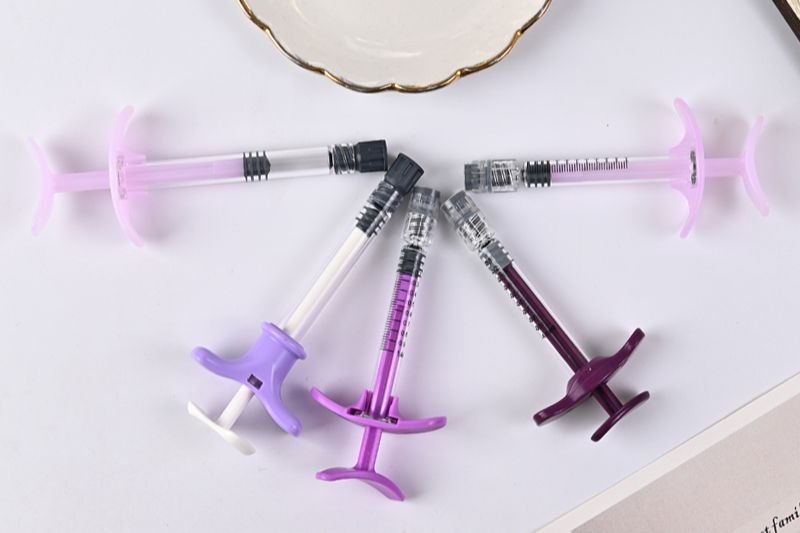
A prefilled syringe, abbreviated as PFS, is a type of disposable syringe with filled medication or drug solutions. These syringes are sealed and ready for immediate use without manual filling. Prefilled syringes are typically used for administering vaccines, insulin, biologics, and other medications. They are easy to use, accurate in dosage delivery, and reduce the risk of contamination.
As biotherapeutic drugs advance, there’s a growing spotlight on the prefilled syringe system.
The market mainly offers two types of prefilled syringes. One is crafted from borosilicate glass, while the other is a polymer syringe that has gained prominence in recent years. Polymer syringes encompass two variations: COC and COP syringes.
Glass prefilled syringes currently hold the majority share in the PFS market. However, polymer syringes show great potential for sensitive biological and hyaluronic acid-based drugs. This article will introduce the unique attributes of borosilicate glass and polymer materials. We will also offer insights into factors to consider when selecting PFS materials. It aims to serve as a valuable resource for PFS selection.
The advantages of prefilled syringes
Pre-filled syringes aren’t like the traditional mix of medication vials and separate syringes. They offer the following features:
- Pre-loaded medication: Pre-filled syringes are preloaded under a sterile GMP workshop. It can reduce the risk of bacterial contamination compared to drawing from vials.
- Accurate dosage: The medication is pre-filled with single-dose units. The patients do not have to worry about calculation errors. Thus, the prefilled syringes improve the accuracy and effectiveness of treatment.
- Convenience: Pre-filled syringes are convenient and easy to use. It helps healthcare providers avoid mixing and measuring medications to save much time.
- Easy to store and transport: PFS materials are less prone to chemical reactions with drugs. They can also store drugs. PFSs are smaller in size, making transportation more convenient.
- Reduction of medication waste: Pre-filled syringes accurately allocate medication doses and have almost no residuals after use. They avoid wasting medication and the costs and burdens it brings.
- Reliability: This is due to the controlled production and packaging processes. They are usually high in reliability and stability. This ensures medication quality and safety.
Pre-filled syringes are important in medicine. They provide precise doses, are easy to use, and are safe. So the patients can have a better treatment experience and medical outcomes.
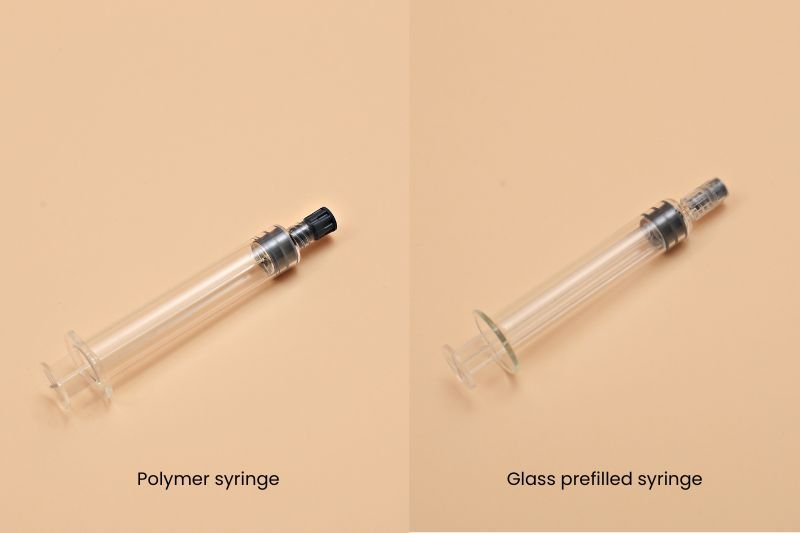
The distinction between glass and polymer prefilled syringes
Material
Glass prefilled syringes are made of borosilicate glass and can withstand high temperatures. Their advantages include high transparency, chemical resistance, and good barrier properties. Currently, raw materials are easy to get as the production capacity is enough.
Polymer syringes are a new type of high-performance thermoplastic. They combine the benefits of borosilicate glass and regular plastics. They are flexible, less prone to breakage, and can be manufactured in many sizes and shapes. Polymer syringes can achieve commercial production of up to 50ml in volume.
Appearance
Glass prefilled syringes have two connected systems: Luer Lock and Luer cone. A Luer Lock syringe consists of a syringe barrel and a luer lock ring. They can be selected with or without scales to match different administration situations.
Polymer syringes are integrally formed and come with screw threads. They do not have a Luer cone pattern and lack scales. They are filled for single-dose administration.
Performance
Glass-prefilled syringes have better gas and moisture barriers than polymer syringes. But, they have a little higher moisture absorption.
The production of glass prefilled syringes requires siliconization. Studies have shown that glass prefilled syringes have more protein adsorption. This is true for them than for polymer syringes.
Steam autoclave sterilization can be used for both pre-filled syringes. But, borosilicate glass tolerates higher temperatures than polymers.
Borosilicate glass has a possibility of ion leaching while the polymer doesn’t. So the Polymer is good in low extractables and leachables performance. Polymer syringes exhibit better chemical resistance compared to borosilicate glass.
Cost
Glass prefilled syringes have been developed for a long time. After over a decade of development, their production processes are relatively mature. The supply chain system is complete, and raw materials are abundant. During the COVID-19, many companies made glass syringes for vaccine packaging. This led to a surge in production capacity. Thus, the prices of glass syringes are transparent and competitive. Some well-known brands of glass syringes may have a higher brand premium.
Polymer syringes are a new material and producing them is still challenging. And, production capacity is limited. So, their cost is high. It is about 3-4 times that of glass prefilled syringes. The market is growing and applications are expanding. In the future, supply and demand, production size, and brand will influence prices.
How to choose? Polymer or Glass prefilled syringe?
Currently, borosilicate glass syringes make up about 95% of the PFS market. They work with different filling machines. Pharmaceutical companies find it easy to integrate glass prefilled syringes into production processes. Besides, regulatory agencies are familiar with borosilicate glass, simplifying the drug approval process.
Polymer syringes are becoming popular in the biopharmaceutical industry. This is due to their stability, inertness, and design flexibility. They are gaining attention as an appealing alternative to glass syringes.
Both glass and polymer syringes play unique roles in the PFS market. When selecting syringes, companies should consider the following aspects comprehensively:
- Product requirements, process requirements, and patient needs;
- Assessing the sensitivity of products to factors such as oxygen, moisture, etc.;
- Considering the interaction between drugs and containers;
- Process requirements and processability, whether need the more flexible design and stricter tolerances;
- Anticipated usage and patient needs, such as injection difficulty, fracture resistance, etc.;
- Cost budget. Balancing the cost-benefit of different material products based on requirements.
So, before deciding, you should fully evaluate and balance these factors. This is to ensure that the chosen PFS material can meet your needs well and follow market standards.