
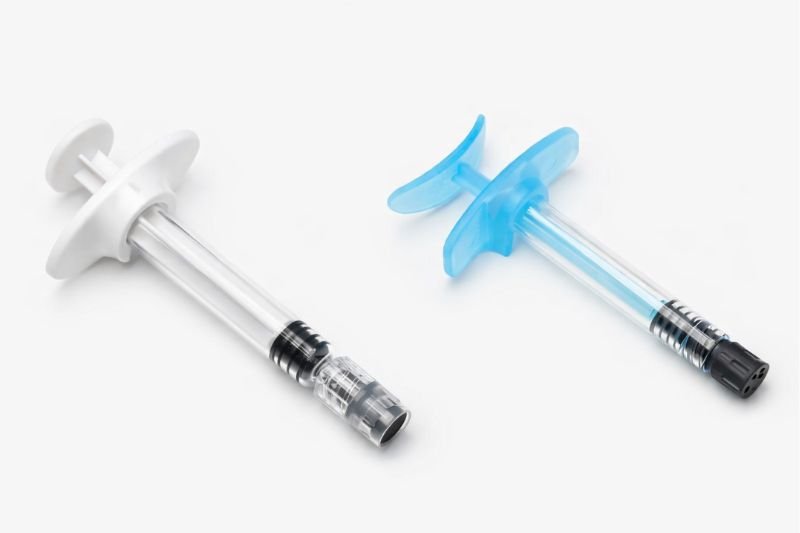
For prefillable syringe selection, there is no single “best” material for every drug product.
Borosilicate glass remains the most established choice because of its strong barrier properties, mature supply chain, and broad regulatory familiarity. Polymer syringes, especially COC and COP, are increasingly preferred for sensitive biologics and high-value formulations because they offer improved break resistance, low extractables, and reduced risk of tungsten-related interactions.
In practice, the right material choice depends on formulation sensitivity, sterilization method, device requirements, cost targets, and regulatory strategy.
Why Material Choice Matters in Prefillable Syringes
A prefillable syringe is not just a container. It is part of the container closure system and can directly affect drug stability, dose delivery, device compatibility, and lifecycle risk. FDA guidance treats prefilled syringes as packaging systems with important functional and drug-delivery considerations, meaning material selection can affect both product performance and regulatory submissions.
For pharmaceutical buyers and packaging procurement teams, this means syringe material should be evaluated not only by price, but also by:
- extractables and leachables risk,
- protein and particle stability,
- sterilization compatibility,
- mechanical robustness,
- fill-finish line performance,
- and long-term regulatory acceptance.
What the Market Uses Today
Borosilicate glass prefillable syringes remain the industry benchmark for many injectable products, especially vaccines and established formulations, because they offer excellent barrier performance and a long regulatory history. SCHOTT explicitly positions Type I borosilicate prefillable glass syringes as a trusted option for a wide range of vaccines, including inactivated, live-attenuated, recombinant, and mRNA vaccines.
At the same time, cyclic olefin materials are gaining traction. EDQM published new European Pharmacopoeia chapters for both COP and COC materials in 2025, which is a strong signal that both are becoming increasingly important and standardized for modern pharmaceutical packaging.
Material Comparison Table
Borosilicate glass remains the most established and scalable option, while COC and COP offer clear material advantages for sensitive molecules and advanced biologic formulations.
| Feature | Borosilicate Glass | COC | COP |
|---|---|---|---|
| Breakage resistance | Lowest of the three; can crack or break under mechanical stress | High; break-resistant and lightweight | High; break-resistant and widely promoted as an alternative to glass |
| Extractables / leachables | Generally low, but risks can include alkali ions, tungsten-related concerns, and glass-related interactions depending on system/process | Low; heavy-metal-free and tungsten-free, with a different E&L profile than glass | Low; low extractables/leachables, tungsten-free, often selected for sensitive biologics |
| Protein stability / adsorption risk | Can be affected by glass surface, silicone oil, and tungsten-related interactions in some systems | Generally favorable for sensitive proteins, but formulation-specific evaluation is still needed | Strong public support for biologics; several studies and supplier platforms show less aggregation under agitation than siliconized glass systems |
| Barrier properties | Best moisture and gas barrier | Lower than glass, but better than many commodity plastics | Lower than glass, but still strong for many biologic applications |
| Heat resistance | Highest; well suited to high-temperature processes | Good, but below glass at extreme temperatures | Good, including sterilization compatibility, but below glass for extreme heat |
| Sterilization compatibility | Broad | Broad | Broad |
| Transparency | Excellent | Excellent, glass-like | Excellent, glass-like |
| Cost | Usually lowest and most mature | Usually above glass | Usually above glass; may be premium depending on platform |
| Typical applications | Vaccines, established injectables, broad commercial use | Biologics, sensitive formulations, selected vaccine and specialty uses | Sensitive biologics, biosimilars, ophthalmics, high-value formulations, some viscous injectables |
Borosilicate Glass: The Established Standard
Glass prefillable syringes remain dominant because the industry has decades of experience processing, sterilizing, inspecting, filling, and registering them at a commercial scale. They provide excellent oxygen and moisture barrier properties and strong dimensional familiarity across fill-finish lines and device systems. This is why they continue to be widely used for vaccines and other mainstream injectable drugs.
Public data suggest that silicone oil and tungsten associated with some glass syringe systems may contribute to protein aggregation, unfolding, or particle formation in sensitive biologics.
Best fit for buyers:
Glass prefillable syringes are especially practical for vaccines and well-characterized injectable formulations.
COC: A Strong Polymer Alternative With Growing Regulatory Recognition
COC has become a serious material option for prefillable syringes because it combines high clarity, low moisture uptake, low metal contamination risk, and strong mechanical toughness. Compared with glass, its oxygen and gas barrier is lower, which may matter for particularly oxygen-sensitive formulations.
Best fit for buyers:
COC deserves serious consideration for biologics, specialty injectables, and selected advanced vaccine or mRNA-related packaging strategies.
COP: The Leading Polymer Platform for Sensitive Biologics
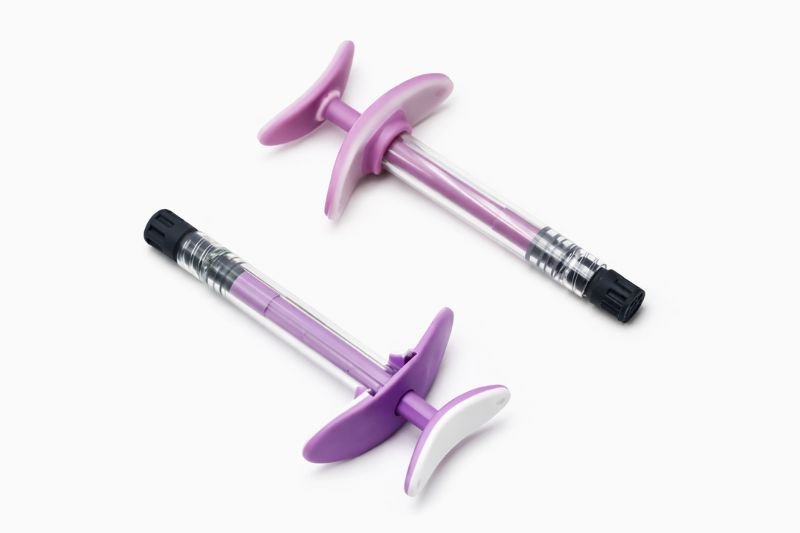
Among cyclic olefin materials, COP currently appears more frequently in commercial prefillable syringe platforms for sensitive drug products.
A published PubMed-indexed study found that proteins stored in glass and COP-based syringes had comparable long-term stability, but under agitation, proteins generally showed less aggregation in COP syringes than in glass syringes. This suggests that COP can provide a more controlled environment for sensitive proteins than traditional siliconized glass systems in certain use cases.
Best fit for buyers:
COP is especially attractive for monoclonal antibodies, biosimilars, ophthalmics, and high-value biologics where break resistance, low extractables, and reduced tungsten-related risk are important.
Which Material Is Better for Protein Drugs?
For protein drugs, the available public evidence does not support the simplistic claim that “glass is bad” or “polymer is always better.” The more accurate conclusion is this:
- Glass remains viable and broadly used.
- Polymer systems, especially COP, may reduce some known stress factors associated with glass systems, particularly under agitation or when tungsten/silicone sensitivity is a concern.
- Final choice should always be based on formulation-specific stability data, not generic marketing language.
This matters for pharmaceutical packaging procurement. If your formulation is a standard vaccine or a robust small-molecule injectable, glass may still be the most efficient commercial answer. If your drug is a sensitive biologic, a high-value protein formulation, or an advanced specialty injectable, COP or COC may offer a lower-risk development and packaging path.
Conclusion
Borosilicate glass remains the most established material for prefillable syringes, particularly for vaccines and mainstream injectable drugs. COC and COP have moved from “alternative materials” to serious pharmaceutical packaging options, with growing regulatory recognition and strong relevance for biologics. Among the polymer options, COP currently has the strongest public visibility in sensitive biologic syringe platforms, while COC is also well positioned and increasingly standardized.
For B2B buyers, the best decision is not material-first but drug-platform-first:
- Choose glass for regulatory familiarity, barrier performance, and commercial scale.
- Consider COC for purity profile, impact resistance, and modern polymer-based packaging.
- Prioritize COP when molecule sensitivity, interaction risk, and premium biologic performance are key project drivers.
Contact our team today for drawings, samples, or project discussion.